
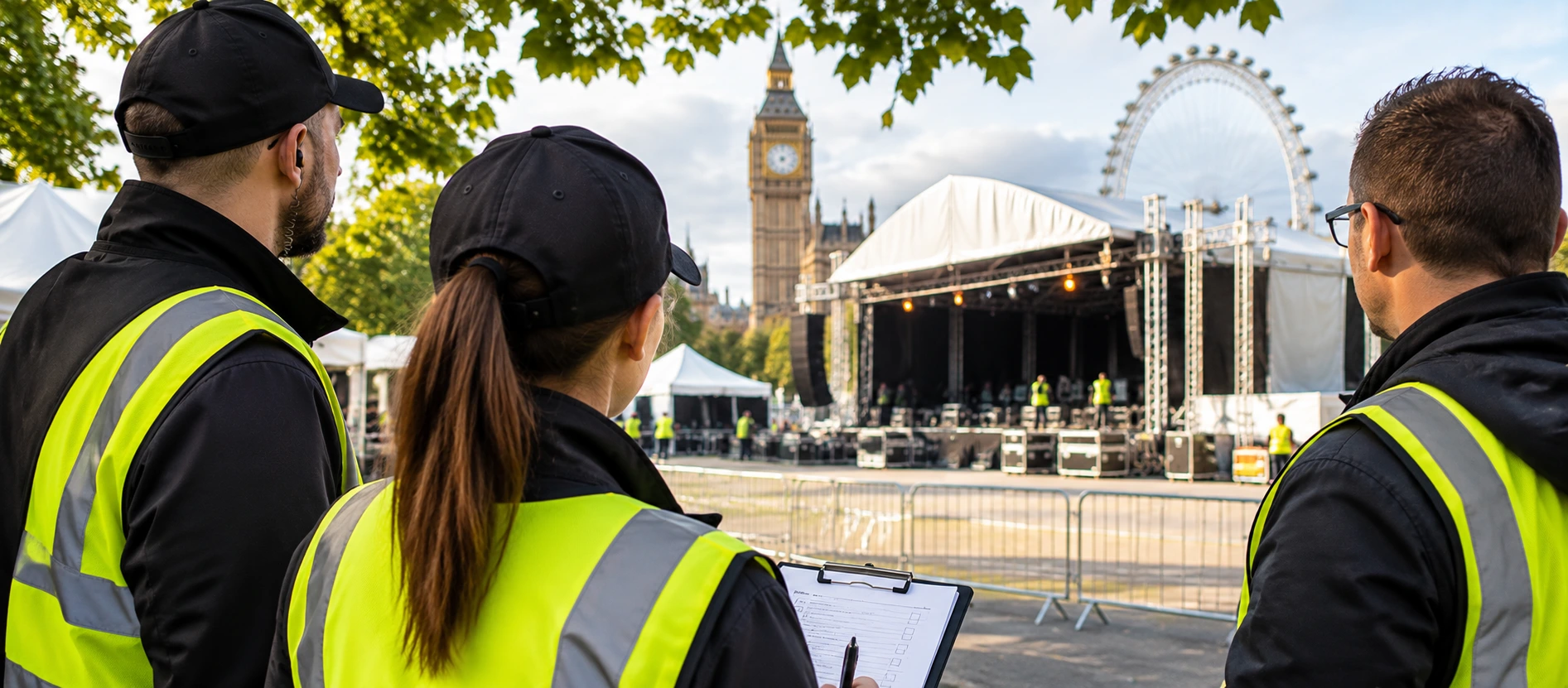
A good event planning checklist for London covers ten things: a clear goal, a realistic budget, the right date, a suitable venue, the right number of staff, safety and permissions, supplier bookings, transport and access, a detailed run sheet and a plan for the day after. Miss one of these and the whole event can feel the pressure.
London is a brilliant place to host anything from a product launch to a music festival, but it also comes with its own challenges – busy roads, strict venue rules, tight load-in times and high costs. Having the right people matters just as much as having the right plan, which is why many organisers book experienced event staff in London early in the process. This event planning checklist walks you through each step in plain, simple terms.
Why You Need an Event Planning Checklist
An event has hundreds of small moving parts. When they live only in your head or across scattered emails, things slip through the cracks. A simple checklist:
- Keeps everyone working from the same plan
- Shows you what is done and what is still open
- Helps you spot problems weeks before the event, not hours before
- Makes it easier to hand tasks to your team or suppliers
The 10-Point Event Planning Checklist
1. Set a Clear Goal
Start by asking one question: what does success look like? It might be ticket sales, leads for your business, staff morale or press coverage. Your goal shapes every other choice, from the venue to the guest list.
2. Build a Realistic Budget
London prices can surprise first-time organisers. List every cost before you commit to anything:
- Venue hire and deposits
- Staff, crew and security
- Equipment such as staging, sound and lighting
- Catering and drinks
- Transport, parking and deliveries
- Insurance and permits
Always keep a contingency of around 10–15% for last-minute changes.
3. Pick the Right Date
Check what else is happening in London on your date. Big concerts, sporting fixtures, marathons and planned rail strikes can affect transport, hotel prices and how many guests turn up.
4. Choose a Venue That Fits
Visit the venue in person if you can. Look beyond how it looks and check:
- Capacity – both standing and seated
- Loading bays and access times for suppliers
- Lift access for heavy kit and for guests with mobility needs
- Noise limits and finish times
- What the venue already provides and what you must bring in
5. Plan Your Staffing
This is where many events go wrong. Work out every role you need – front of house, bar, cloakroom, stage crew, runners and stewards – and how many people each role needs at the busiest point of the day. Remember to cover setup and breakdown too, not just the event hours. If your event involves heavy equipment or a stage build, a trained event crew team can handle the load-in, rigging and get-out safely while you focus on your guests.
6. Sort Out Safety and Permissions
Speak to your venue and the local council early. Depending on your event, you may need a licence for alcohol or live music (for some smaller one-off events this can be a Temporary Event Notice), a risk assessment, first aid cover and a crowd management plan. For larger events, think about stewards to guide people and licensed security for entrances and bag checks.
7. Book Your Suppliers Early
Good caterers, AV teams and equipment hire companies get booked up fast, especially in summer and in the run-up to Christmas. Get written quotes, confirm what is included and agree arrival times in writing.
8. Plan Transport and Access
Getting in and out of central London is often harder than people expect. Think about:
- The Congestion Charge and ULEZ for vans and coaches
- Where suppliers can park and unload
- The nearest stations and step-free routes for guests
- Late-night travel options if the event finishes late
9. Write a Run Sheet
A run sheet is a minute-by-minute plan of the day. It should list who does what, when and where, plus a phone number for every key contact. Share it with your whole team and suppliers at least a few days before the event.
10. Plan the Breakdown and Follow-Up
The event is not over when the last guest leaves. Plan who will clear the venue, return hired kit and check for damage. Afterwards, send thank-you messages, collect feedback and note what you would change next time.
A Practical Example
Imagine you are planning a product launch for 300 guests at a warehouse venue in East London. Using this checklist, you would:
- Set the goal: 50 new business leads
- Budget for venue, AV, catering, 15 front-of-house staff and 6 crew for the stage build
- Check that the venue allows vans to unload from 8am
- Book stewards for the entrance and queue area
- Share a run sheet showing doors at 6pm, speeches at 7pm and venue clear by 11:30pm
With each part written down, nothing is left to chance and every person knows their job.
Common Mistakes to Avoid
- Booking the venue before setting a budget – it often eats most of the money.
- Underestimating staff numbers – queues, empty bars and slow setups follow.
- Forgetting setup and breakdown time – venues may charge extra if you overrun.
- Leaving safety until the last minute – permissions can take weeks.
- No backup plan – for weather, late suppliers or staff dropping out.
Final Thoughts
A good event planning checklist turns a stressful project into a clear set of steps. Get your goal, budget, venue, staffing and safety sorted early, and the event day becomes far easier to manage. The right team makes a huge difference too. If you need reliable people for your next event in London, reach out to Soundboy Crew to check availability for your date.
FAQs
How far in advance should I start planning an event in London?
For small events, around 6–8 weeks is often enough. For larger events, festivals or busy dates like December, start 4–6 months ahead so you can secure the venue, suppliers and staff you want.
What should be on an event planning checklist?
Your event planning checklist should cover your goal, budget, date, venue, staffing, safety and permissions, suppliers, transport, a run sheet and the breakdown plan.
How many staff do I need for my event?
It depends on guest numbers, the type of event and the venue layout. Count every role at the busiest time of day, then add cover for breaks, setup and breakdown.
Do I need security or stewards for my event?
Many larger events do. Stewards help guide guests and manage crowds, while licensed security staff handle tasks like door control and bag searches. Your venue and local council can tell you what is expected for your event.